
AI

CloudNine’s Next Evolution: Advancing eDiscovery with Automation, Modern Data, and On-Premise Innovation – Part 4 of 4

This is a Part 4 of a special 4 part series presented by CloudNine.

Over time, the scope of eDiscovery and investigative work has expanded well beyond its original boundaries. What used to center on email and documents now includes dynamic data from cloud systems, smartphones, messaging apps, and collaboration platforms. This shift has placed new demands on legal professionals and organizations to efficiently manage and review data at scale, often within tight deadlines and regulatory frameworks.

Amid this transformation, CloudNine remains focused on delivering forward-thinking innovation. With recent updates here is a four-part series that will discuss:

CloudNine delivers a cohesive vision: a fully modernized, automated, and scalable eDiscovery workflow for all data types. 


Part 4 – Preparing for the Future: CloudNine Review On-Premise 

Review and Beyond: Delivering Control, Context, and a Unified eDiscovery Future

The evolution of eDiscovery is no longer just about collecting and processing data, it’s about creating a seamless, end-to-end workflow that gives organizations complete control over how that data is reviewed, analyzed, and produced. The upcoming CloudNine Review On-Premise platform represents a significant step in that direction, offering organizations greater flexibility in how and where their data is managed with all of the previous articles in this series being rolled into an on-premise modernized eDiscovery review platform!

With full on-premise review capabilities, organizations can keep sensitive data within their own controlled environments while still benefiting from the advanced functionality CloudNine is known for. This deployment model is especially valuable for government agencies and regulated industries, where data security, sovereignty, and compliance are non-negotiable. At the same time, seamless integration with CloudNine LAW ensures that data flows efficiently from processing into review, regardless of whether it originates from traditional sources or modern communication platforms.

The result is a true end-to-end eDiscovery workflow with collection, processing, review, and production all operating within a secure and unified ecosystem. Microsoft 365 data can be collected directly through CloudNine’s connectors, while partnerships with providers such as Cellebrite, Oxygen Forensics, Pinpoint Labs, and ModeOne extend collection capabilities to mobile, forensic, and other specialized data sources. These inputs can then be coordinated and managed through CloudNine’s services team, ensuring consistency from the earliest stages of a matter.

Modern Data Review: Context is Everything

One of the most significant advancements in CloudNine Review, whether SaaS or on-premise, is the ability to review data natively, in context.

Key Capabilities

  • Conversation-based review: Instantly see communications between custodians
  • Cross-channel visibility: Follow conversations across email, Teams, and text
  • Granular tagging: Tag individual items or entire conversations
  • Automated redactions on export: No need to manually draw redaction boxes

As data types have evolved, so too has the way reviewers need to interact with that data. One of the most important advancements in CloudNine Review, whether deployed in the cloud or on-premise, is its ability to present information in context. Modern communications are not isolated documents; they are dynamic, multi-threaded conversations that span platforms and participants. Reviewing them effectively requires more than a linear, document-by-document approach.

A Unified Vision for eDiscovery Innovation

CloudNine addresses this need with a context-driven review experience. Conversation-based review allows users to instantly see communications between custodians, making it easier to understand the flow and intent behind interactions. Cross-channel visibility further enhances this capability by enabling reviewers to follow conversations as they move between email, Microsoft Teams, and text messages. This holistic view ensures that critical details are not missed simply because they exist in different systems.

In addition, granular tagging provides flexibility in how information is categorized and organized. Reviewers can apply tags at the individual item level or across entire conversations, aligning workflows with the realities of modern data. Automated redactions on export further streamline the process, eliminating the need for manual markup while maintaining accuracy and consistency in produced documents.

Taken together, these capabilities fundamentally transform the review process. Instead of analyzing isolated files, legal teams can conduct more efficient, context-rich investigations that better reflect how communication actually occurs.

Across all these updates, a clear theme emerges: CloudNine is building a fully integrated, automated ecosystem for modern eDiscovery and over 5,000 traditional data types.

Stepping back, a broader vision becomes clear. Across its platform, CloudNine is building a fully integrated and automated ecosystem designed to handle both modern data sources and thousands of traditional file types. This unified approach delivers meaningful strategic advantages. Automation reduces the manual effort that has historically slowed eDiscovery workflows and introduced risk. Support for modern data ensures that organizations are prepared for the realities of today’s communication landscape and whatever comes next. Unified workflows eliminate the inefficiencies of switching between tools, while on-premise capabilities provide the control and security many organizations require.

For legal teams, government agencies, and corporate investigators, the impact is tangible. They can manage growing data volumes with greater confidence, respond more quickly to investigations and FOIA requests, and maintain defensibility through consistent, auditable processes. Perhaps most importantly, they can scale their operations without adding unnecessary complexity.

Conclusion: Turning Complexity into Capability

The growth of modern data shows no signs of slowing, but with the right approach, it does not have to be overwhelming. CloudNine’s latest innovations from automated redaction and Microsoft 365 connectors to expanded LAW processing and the forthcoming on-premise review platform reflect a focused effort to address the real-world challenges facing today’s legal and investigative professionals.

What emerges is more than incremental progress. It is a shift in how organizations approach eDiscovery: moving from manual processes to automation, from fragmented tools to unified workflows, and from reactive responses to proactive, strategic data management. In this new model, complexity is no longer a barrier, it becomes a capability that organizations can confidently control and leverage.

Stay tuned for our continued incorporation of AI in CloudNine Review!

Series Links:
Part 1: Automated Redaction
Part 2: Microsoft 365 Data Collection
Part 3: Expanded Modern Data Processing through CloudNine LAW
Part 4: CloudNine Review On-Premise Platform with Modern Data

CloudNine’s Next Evolution: Advancing eDiscovery with Automation, Modern Data, and On-Premise Innovation – Part 3 of 4

This is a Part 3 of a special 4 part series presented by CloudNine.

eDiscovery has entered a new era. The days of primarily reviewing email and static files have given way to an environment filled with cloud-based data, mobile communications, chat threads, and collaborative workspaces. With this evolution comes increased complexity, as organizations must quickly sift through growing volumes of diverse data while maintaining compliance and accuracy.

To meet these challenges head-on, CloudNine is driving forward with a commitment to innovation. With recent updates here is a four-part series that will discuss:
 

CloudNine delivers a cohesive vision: a fully modernized, automated, and scalable eDiscovery workflow for all data types. 


Part 3 – Expanding the Power of CloudNine LAW: Modern Data Processing Reimagined 

The Explosion of Modern Data

The nature of evidence in today’s investigations and litigation has fundamentally changed. While email once dominated the eDiscovery landscape, modern cases now routinely involve a far broader and more complex set of data sources. SMS and mobile messages, chat applications, social media content, and full forensic mobile extractions have become central to telling the complete story. 

This shift has introduced new challenges for legal and investigative teams. Historically, handling these diverse data types required multiple specialized tools, each designed for a specific format or source. As a result, workflows became fragmented, data had to be moved and transformed between systems, and valuable context was often lost along the way. What should be a cohesive process instead became a patchwork of disconnected steps. 

Today’s cases increasingly involve: 

  • SMS and mobile messages 
  • Chat applications 
  • Social media 
  • Forensic mobile extractions 

CloudNine LAW is now designed to address this growing complexity by unifying how modern and traditional data is processed and prepared for review. A key advancement is its ability to directly import Cellebrite UFDR (Universal Forensic Data Report) files. This capability brings mobile forensic data that was once siloed in specialized forensic tools into the broader eDiscovery workflow without the need for time-consuming conversions or intermediary steps. 

This development is particularly significant because UFDR files contain some of the richest and most nuanced data in modern investigations. They include not only text messages and communications from applications like WhatsApp, but also call logs, voicemails, app data, and detailed metadata that provides critical context for each interaction. Traditionally, extracting value from this data meant converting it into document-based formats, often stripping away relationships between messages, participants, and timelines. 

A Unified Platform for All Data 

CloudNine LAW bridges traditional and modern data: 

  • Emails, PDFs, and Office files 
  • Mobile and chat data 
  • Cloud-based exports 
  • Automated import of UFDR  

By enabling direct ingestion of UFDR files, CloudNine LAW preserves this context and allows teams to work with the data in a more natural and complete way. Communications remain connected, metadata stays intact, and the integrity of the original evidence is maintained. This approach eliminates the inefficiencies of manual conversions and reduces the risk of losing key details that could impact case outcomes. 

Beyond mobile data, CloudNine LAW serves as a unified processing platform for all types of evidence. Traditional data sources such as emails, PDFs, and Office documents can be handled alongside modern communication data and cloud-based exports. This consolidation significantly reduces tool sprawl, allowing organizations to standardize their workflows and apply consistent processing practices across every data type involved in a matter. 

Early Data Culling for Efficiency 

LAW enables powerful early-stage data reduction: 

  • Deduplication across all data types 
  • Advanced filtering 
  • Targeted culling before review 

The result: 

  • Less data sent downstream 
  • Faster and more cost-effective review cycles 

Efficiency gains extend even further through early-stage data culling. CloudNine LAW enables organizations to reduce data volumes before they ever reach the review phase. Through deduplication across all data types, advanced filtering, and targeted culling, teams can eliminate irrelevant or redundant information early in the process. The result is a smaller, more focused dataset that accelerates review timelines and reduces overall costs. 

For government agencies and organizations operating in highly regulated industries, deployment flexibility is another critical consideration. CloudNine LAW’s on-premise capabilities ensure that sensitive data remains within controlled environments. This supports strict security requirements, maintains full organizational control over data, and helps ensure compliance with internal policies and regulatory obligations. 

As the volume and variety of modern data continue to expand, the ability to process and manage that data within a single, cohesive platform is no longer a luxury, it’s a necessity. By integrating mobile forensic evidence with traditional eDiscovery workflows, CloudNine LAW empowers organizations to move beyond fragmented processes and toward a more efficient, defensible, and future-ready approach to data management and review. 

Series Links:
Part 1: Automated Redaction
Part 2: Microsoft 365 Data Collection
Part 3: Expanded Modern Data Processing through CloudNine LAW
Part 4: CloudNine Review On-Premise Platform with Modern Data

CloudNine’s Next Evolution: Advancing eDiscovery with Automation, Modern Data, and On-Premise Innovation – Part 2 of 4

This is a Part 2 of a special 4 part series presented by CloudNine.

The world of eDiscovery and investigations looks very different than it did just a few years ago. Email and traditional documents are no longer the primary focus and instead, today’s matters span cloud environments, mobile devices, messaging platforms, and real-time collaboration tools. This explosion of data types has introduced new challenges for legal teams, government agencies, and corporations working under demanding timelines and regulatory pressures. 

In response to these shifting demands, CloudNine is continuing to advance innovation in meaningful ways. With recent updates here is a four-part series that will discuss: 

CloudNine delivers a cohesive vision: a fully modernized, automated, and scalable eDiscovery workflow for all data types. 

Part 2 – Automation: Driving Efficiency in Microsoft 365 Data Collection

The Challenge of Modern Microsoft 365 Data 

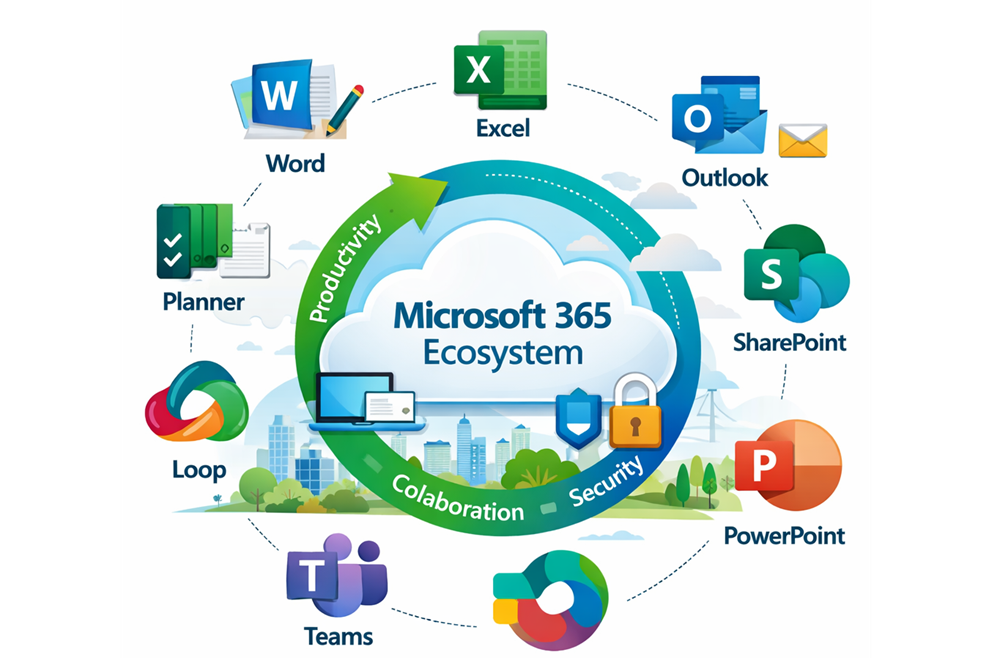
Microsoft 365 has firmly established itself as the backbone of modern enterprise communication and collaboration. From email in Exchange Online to file storage in OneDrive and SharePoint, and increasingly dynamic conversations in Teams, organizations are generating and storing vast amounts of data across a highly distributed ecosystem. Newer applications like Loop and Planner only add to this complexity. While this evolution has improved productivity, it has also created significant challenges for eDiscovery professionals tasked with identifying, collecting, and preserving relevant information. 

Unlike traditional data sources, Microsoft 365 content is not centralized or easily exportable. Data is often fragmented across services, governed by layered permissions, and stored in formats that require context to fully understand. For legal and investigative teams, this means that what should be a straightforward collection process can quickly become time-consuming, resource-intensive, and dependent on IT or external vendors. 

Organizations must collect data from: 

  • Exchange Online (email) 
  • OneDrive and SharePoint 
  • Teams chats and channels 
  • Emerging tools like Loop and Planner 

This data is often fragmented, permission-restricted, and difficult to export efficiently. 

CloudNine’s Approach: Direct, Unified Collection 

CloudNine addresses these challenges by rethinking how Microsoft 365 data collection should work. Rather than relying on manual exports or disconnected tools, CloudNine leverages secure, API-driven integrations to enable direct access to Microsoft 365 data. This approach creates a unified collection experience across Exchange, OneDrive, SharePoint, Teams, and other emerging applications. By centralizing control within a single interface, legal teams can take ownership of the collection process without the traditional bottlenecks. 

CloudNine simplifies Microsoft 365 collection through: 

  • Secure API-driven integrations 
  • Elimination of manual exports 
  • A unified interface across all data sources 

Legal teams can now manage collections without heavy reliance on IT or third-party vendors. 

Automation that Reduces Complexity 

Automation plays a central role in this transformation. With CloudNine, collections can be initiated and managed based on custodians, allowing teams to target specific individuals and apply filters that narrow the scope of data from the outset. Once configured, collection jobs can be automatically created and executed, running in the background with minimal user intervention. This reduces the need for constant oversight while ensuring consistency and repeatability. 

CloudNine introduces automation at every step: 

  • Custodian-based targeting and filtering 
  • Automated job creation and execution 
  • Background processing with minimal user intervention 

CloudNine removes these inefficiencies with a direct pipeline from collection into CloudNine Review. 

Automation does not come at the expense of data integrity or context. Complex data types, such as Teams conversations with embedded files or linked content, are collected in a way that preserves their relationships. This ensures that reviewers see communications as they originally occurred, rather than as disconnected fragments. 

Another critical advantage of CloudNine’s approach is the elimination of costly and inefficient intermediary steps. Traditional workflows often involve multiple exports, staging environments, and reprocessing using separate tools. Each step introduces additional time, expense, and risk. By creating a direct pipeline from Microsoft 365 into CloudNine Review, these inefficiencies are removed entirely. 

Seamless Transition into Review 

This seamless transition from collection to review has a meaningful impact on case timelines. Legal teams can move more quickly into Early Case Assessment (ECA), gaining insights sooner and making informed decisions earlier in the process. At the same time, metadata integrity is preserved, and the risk of data loss or corruption is significantly reduced. 

Defensibility and Compliance 

From a defensibility standpoint, automation also strengthens compliance. Standardized workflows ensure that every collection follows the same repeatable process. Detailed logging and audit trails provide transparency into each action taken, supporting legal defensibility and alignment with EDRM best practices. 

Ultimately, what has traditionally been one of the most challenging phases of eDiscovery is transformed into a streamlined, efficient, and reliable process. By combining direct integration with intelligent automation, CloudNine enables organizations to approach Microsoft 365 data collection not as a logistical hurdle, but as a strategic advantage. 

The Result: A Transformed Collection Phase 

What was once a bottleneck is now: 

  • Faster 
  • More defensible 
  • Cost-effective 

CloudNine’s Microsoft 365 connectors give case teams a strategic advantage rather than a logistical challenge. 

Series Links:
Part 1: Automated Redaction
Part 2: Microsoft 365 Data Collection
Part 3: Expanded Modern Data Processing through CloudNine LAW
Part 4: CloudNine Review On-Premise Platform with Modern Data

CloudNine’s Next Evolution: Advancing eDiscovery with Automation, Modern Data, and On-Premise Innovation – Part 1 of 4

This is a Part 1 of a special 4 part series presented by CloudNine.

The landscape of eDiscovery and investigations has changed dramatically. What was once a world dominated by email and static documents has evolved into a complex ecosystem of cloud platforms, mobile data, chat applications, and collaborative tools. Legal teams, government agencies, and corporations are now tasked with managing and reviewing vast, diverse datasets and often under tight deadlines and strict compliance requirements. 

Against this backdrop, CloudNine continues to push the boundaries of innovation. With recent updates here is a four-part series that will discuss: 

CloudNine delivers a cohesive vision: a fully modernized, automated, and scalable eDiscovery workflow for all data types. 


Part 1 – Smarter PII and FOIA Request Management: Automated Redaction in CloudNine Review 

The Growing Complexity of data in discovery and FOIA Requests 

Whether it is general litigation or Freedom of Information Act (FOIA), requests are increasing in both volume and complexity. Law firms and government agencies must now process not only emails and PDFs, but also Teams chats, mobile messages, and cloud-based documents. The challenge is clear: how do you maintain transparency while protecting sensitive information? 

Manual redaction is no longer sufficient. 

The Risks of Manual Redaction 

Traditional redaction workflows are: 

  • Time-intensive and resource-heavy 
  • Prone to human error (missed PII or over-redaction) 
  • Difficult to scale under tight deadlines 

For legal and FOIA teams, the stakes are high and errors can lead to compliance risks, reputational damage, or legal consequences. 

Introducing Automated Redaction in CloudNine Review 

CloudNine’s automated redaction capabilities directly address these challenges by embedding intelligence into the review workflow. 

How It Works 

  • Pattern recognition: Automatically detects Social Security numbers, emails, phone numbers, financial data etc. 
  • Keyword and rule-based logic: Customizable detection aligned to agency policies 
  • AI-assisted identification: Enhances detection of sensitive or context-based information 
  • Consistent application: Redactions are applied uniformly across all documents 

Workflow Integration for legal and FOIA Teams 

CloudNine seamlessly integrates redaction into the broader review lifecycle: 

  1. Ingest and process large datasets 
  2. Run automated scans for sensitive data 
  3. Validate results with human reviewers 
  4. Apply batch redactions with full audit tracking 
  5. Export production-ready, redacted documents 

Key Benefits 

  1. Speed and Efficiency
    Dramatically reduces time spent identifying sensitive data, accelerating FOIA response timelines. 
  2. Accuracy and Consistency
    Minimizes human error while standardizing redaction practices. 
  3. Cost Savings
    Reduces reliance on manual review, optimizing limited resources. 
  4. Defensibility and Compliance
    Provides audit trails and consistent adherence to FOIA exemptions. 
  5. Scalability
    Handles growing volumes of modern data without increasing headcount. 

Real-World Impact 

Imagine a legal team managing a large case with PXI or a government agency responding to a large FOIA request involving thousands of emails and chat messages. 

  • Before: Weeks of manual review, bottlenecks, and risk of missed PII 
  • After: Automated detection + targeted human validation 
  • Result: Faster turnaround, improved compliance, and fewer errors 

The Future of eDiscovery and FOIA Processing 

Automation and embedded AI are no longer optional, they are essential. Platforms like CloudNine Review are transforming FOIA from a reactive obligation into a streamlined, defensible process.  

Series Links:
Part 1: Automated Redaction
Part 2: Microsoft 365 Data Collection
Part 3: Expanded Modern Data Processing through CloudNine LAW
Part 4: CloudNine Review On-Premise Platform with Modern Data

The “Cloud Reset”: Why Enterprises Are Bringing Data Management Back In-House and Why Legal Should Too

For more than a decade, enterprise IT strategy favored an almost singular mission: get as many data and business processes as possible into the public cloud. While that approach unlocked scalability, rapid provisioning, and new ways of working, a “Cloud Reset” is now reshaping enterprise infrastructure strategy with major implications for government agencies, legal operations, litigation support teams, and corporate legal departments.  

What Is the Cloud Reset? 

The Cloud Reset refers to a growing trend where organizations are rebalancing their cloud strategies, moving critical workloads back into private cloud and on-premise environments, and choosing the most appropriate infrastructure for each workload rather than defaulting to public cloud. A Fortune 100 corporation recently shared its research that 69% of surveyed enterprises are considering repatriating workloads, and more than one-third have already done so. At the same time, private cloud is now being seen as a strategic platform equal to public cloud, not a fallback.  

This shift is especially relevant as enterprises build environments for AI, data governance, compliance, and cost control; areas where private infrastructure often has significant advantages. The cloud reset strategy approaches a thoughtful hybrid approach rather than an “all cloud” or “all on-premise” policy.  

The Three Core Drivers of the Cloud Reset 

  1. Cost Management & Predictability

Public cloud pricing models, especially for storage, egress, compute, and AI inference, are often unpredictable over the long term. Many enterprises report spending waste that exceeds 25% or more on public cloud bills. The private cloud and on-premise models bring cost predictability, transparent budgeting, and lower total cost of ownership, especially for steady and regulated workloads.  

  1. Greater Data Control & Security

Security and compliance are now leading drivers for repatriation. In the Fortune 100 corporation’s surveys, 92% of IT leaders say they trust private cloud for security and compliance, and many firms prefer to retain sensitive data behind their own firewalls. This is particularly acute for regulated industries and organizations subject to strict privacy laws: scenarios common in legal holds, investigations, and litigation matters.  

  1. AI Workloads Demand Specialized Infrastructure

As CIOs and CTOs plan AI strategies, they want environments that combine performance, data privacy, and governance. Over half of enterprises prefer private cloud for AI model training and inference, where the costs and risks of using third-party infrastructure can be prohibitive.  

 What This Means for Legal Departments & eDiscovery 

The same pressures shaping enterprise IT are informing eDiscovery and litigation-ready infrastructure decisions: 

  • Data volumes and complexities are increasing rapidly, especially with modern data sources like Slack, Teams, mobile messaging, and AI-generated content. 
  • Regulatory scrutiny and internal investigations demand clear ownership and control of sensitive information. 
  • Budget transparency and cost containment are now board-level expectations in many corporations. 

Yet many legal teams still rely on “cloud by default” strategies for eDiscovery processing, review, and litigation support. This exposes them to variable costs, third-party control over data, and limited governance, exactly the challenges that are pushing IT leaders toward private cloud and on-premise deployment models. 

 Bringing the Reset to Legal Workflows 

CloudNine Review On-Premise: Controlled, Predictable eDiscovery 

Legal teams need platforms that mirror the enterprise shift toward predictability, governance, and security: 

  • Full control of sensitive data: Data stays within corporate infrastructure, under internal security policies.  
  • Predictable, fixed costs: Unlike usage-based cloud fees, on-premise deployments bring budgeting clarity ideal for litigation holds, internal investigations, general litigation and fixed-fee engagements.  
  • Alignment with legal and IT policies: On-premise platforms allow legal to comply with internal controls and security frameworks without relying on external hosting.  

As more corporations recalibrate cloud spend and place workloads where they deliver the most value, CloudNine Review On-Premise provides the equivalent in the legal tech stack; a way to keep mission-critical data processing and review within controlled boundaries. 

CloudNine LAW: The Cornerstone of On-Premise Processing 

Before case data ever reaches review, processing and culling must occur efficiently and securely. CloudNine LAW delivers: 

  • End-to-end control over ingestion, imaging, OCR, deduplication, and production workflows.  
  • Robust support for thousands of file types and complex data sources common in modern investigations.  
  • Cost efficiencies through fixed licensing rather than volume-based fees. Even if SaaS review is budgeted for the case, pre-culling that data before review can save huge hosting expenses. 
  • Integration with review platforms – bridging on-premise processing with downstream analytics and review.  

For legal operations that must operate with fiscal discipline and defensible processes, CloudNine LAW and CloudNine Review stand as a compelling private infrastructure equivalent and is tightly aligned with the Cloud Reset’s emphasis on control, predictability, and governance.  

 Conclusion: Embrace Strategic Choice 

The Cloud Reset signals an important evolution in how organizations think about infrastructure: cloud isn’t the only destination; the right environment is. The same principle should apply to legal technology stacks. It isn’t “cloud only” or “on-premise” only; it’s evaluating the various business silo’s and units on what can be deployed that is in-line with the organization’s objectives of cost, privacy and security. 

Rather than treating cloud as default, legal teams should design hybrid environments that let them: 

  • Retain sensitive data where governance demands it 
  • Predict and control costs in budget-sensitive matters 
  • Integrate tightly with internal IT and compliance frameworks 

Platforms like CloudNine Review On-Premise and CloudNine LAW empower legal departments to operationalize the Cloud Reset in their workflows bringing eDiscovery, review, and litigation readiness into environments built for control, value, and strategic alignment with broader enterprise IT goals. 


The Return of On-Premise eDiscovery: Why the Market Needs a Revival and How CloudNine Review On-Premise Answers the Call

Over the last decade, the eDiscovery market has experienced a dramatic shift. What was once a landscape that supported both on-premise and hosted review platforms has now become overwhelmingly cloud-centric. Today, nearly every major review platform has transitioned to a SaaS model with some that actively forced clients to migrate, leaving few modern on-premise options available. 

While cloud-based review platforms offer undeniable advantages such as scalability, rapid deployment, and remote access, this industry-wide transition has also created an unintended consequence: a growing vacuum for organizations that still require on-premise review. For many legal teams, cloud-only is not a preference, it’s a limitation. 

The Disappearance of On-Premise Review Platforms 

The move to cloud review platforms has largely been driven by software provider economics and market demand for flexible, subscription-based services. As a result, legacy on-premise platforms have been sunset, deprioritized, or left without meaningful innovation. In many cases, organizations that relied on on-premise review have been given little choice but to migrate their cases and business models to the cloud. 

Yet the disappearance of these platforms does not mean the underlying need has vanished. Instead, it has exposed a critical gap between what cloud-only vendors offer and what many organizations require to operate effectively, securely, and profitably. 

Why On-Premise Review Still Matters 

Despite the prevalence of SaaS platforms, there are clear and compelling reasons why on-premise review remains essential for key segments of the legal market. 

Security and Compliance 

For corporations in highly regulated industries and government agencies operating under strict data governance mandates, data control is non-negotiable. Many organizations are required to keep sensitive information within their own infrastructure due to regulatory obligations, internal security frameworks, or data sovereignty concerns. In these environments, cloud deployment introduces risk, complexity, and extensive oversight requirements that on-premise solutions naturally avoid. 

Cost Control and Predictability 

Cloud pricing models often rely on consumption-based fees tied to data volumes, storage duration, and user activity. While this may work for some matters, it can introduce cost volatility that is incompatible with fixed-fee litigation, internal investigations, and budget-sensitive cases. On-premise review platforms offer predictable costs, allowing law firms and corporate legal teams to manage expenses with far greater certainty.

Business Model Flexibility for Legal Service Providers 

Legal service providers have historically relied on on-premise review platforms to offer hosted review services without sharing margins with SaaS vendors. As cloud-only platforms have become the norm, profit-sharing models have shifted more revenue toward technology providers and away from service organizations. The lack of modern on-premise options limits a provider’s ability to control pricing, differentiate services, and maintain profitability. 

Specialized Law Firm Use Cases 

Even law firms that broadly embrace cloud review often encounter scenarios where on-premise review makes more sense. Cost-sensitive matters, internal client requirements, fixed-fee engagements, or unique workflow demands can all benefit from an in-house review platform that provides control without recurring hosting costs. 

A Market Gap That Can No Longer Be Ignored 

The eDiscovery industry’s near-exclusive focus on cloud deployment has left many organizations with no suitable solution. Corporations and government agencies are forced to accept compromises or implement costly governance controls. Legal service providers lose margin and autonomy. Law firms are left balancing client demands against unpredictable costs. 

This is not a shrinking niche; it is a persistent and underserved segment of the market that has been waiting for a modern, viable on-premise alternative. 

Introducing CloudNine Review On-Premise 

CloudNine is addressing this gap with the upcoming release of CloudNine Review On-Premise, designed specifically to meet the needs of organizations that require full control over their review environment without sacrificing modern review capabilities. 

CloudNine Review On-Premise is built to deliver the functionality, performance, and usability expected from contemporary review platforms, while allowing organizations to deploy and manage the system entirely within their own infrastructure. 

This approach enables: 

  • Complete ownership and control of sensitive data 
  • Alignment with internal security, compliance, and governance requirements 
  • Predictable costs without cloud hosting fees 
  • Freedom from SaaS profit-sharing models 
  • Support for cost-sensitive and fixed-fee matters 
  • Gives case team options for either SaaS or on-premise CloudNine Review 

By offering a true on-premise alternative, CloudNine empowers legal service providers, corporations, government agencies, and law firms to regain control over how review is delivered and priced. 

The Future of eDiscovery Is About Choice 

The evolution of eDiscovery does not point to a cloud-only future, it points to a future defined by flexibility and choice. Cloud platforms will continue to play an important role, but they are not the answer for every organization or every matter. 

With CloudNine Review On-Premise, the industry gains a modern solution for those who cannot, or should not, move everything to the cloud. As data volumes grow, compliance requirements tighten, and cost pressures increase, the return of a robust on-premise review platform represents not a step backward, but a strategic step forward. 

For organizations seeking control, predictability, and independence, CloudNine Review On-Premise is positioned to fill a long-standing gap in the eDiscovery market. 


Why On-Premise eDiscovery Platforms Are Important in Modern Legal Discovery (Part 2)

Note: This is a continuation of our article: Why On-Premise Still Matters: How CloudNine LAW Empowers Secure, Cost-Effective Data Processing 

As legal discovery continues to evolve, so does the data at its core. Collaboration platforms, cloud-based enterprise tools, and mobile devices now generate the majority of potentially relevant evidence. Slack, Microsoft Teams, M365 workloads, and smartphone data are no longer edge cases, they are the case. 

Yet amid rapid innovation and the rise of cloud-only review solutions, one truth remains clear: on-premise review platforms still play a critical and necessary role in the legal discovery ecosystem, especially when paired with robust, modern data processing engines like CloudNine LAW. 

For many organizations, keeping data behind their own firewall is not a legacy preference, it’s a requirement. 

The Reality of Modern Data in eDiscovery 

Today’s evidence that is present in matters routinely involve: 

  • Slack JSON exports with complex threading, reactions, edits, and attachments 
  • Microsoft Teams and M365 data, spanning chats, channels, shared files, and metadata 
  • Corporate cloud data, including OneDrive, SharePoint, and enterprise messaging 
  • Mobile device collections, such as: 
    • Oxygen Forensics .dat exports 
    • Cellebrite UFDR files 
    • PinPoint Labs, ModeOne and other forensic smartphone extractions used in investigations and litigation 

This data is highly structured, deeply nested, and context-dependent. Reviewing it defensibly requires more than simple ingestion, it demands processing sophistication, normalization, and preservation of relationships before attorneys ever begin review. Though many platforms like CloudNine Review have automated these processes, a robust on-premise processing platform is necessary to ensure all traditional and modern data can be processed properly and in a short timeframe. 

Why On-Premise Review Is Becoming More Essential 

While SaaS review platforms offer flexibility, many legal teams, corporations, and government entities still require on-premise review environments for reasons that include security, cost predictability and regulatory requirements. 

  1. Data Control and Security

For regulated industries, government agencies, and organizations handling sensitive investigations, data cannot leave internal infrastructure. 

On-premise review platforms ensure: 

  • Data stays behind the client’s firewall 
  • Internal security, access controls, and monitoring policies remain intact 
  • No third-party hosting risks or cross-tenant exposure 

This level of control is often non-negotiable for matters involving trade secrets, internal investigations, national security, or regulatory scrutiny. 

  1. Seamless Integration with Forensic Collections

Modern discovery frequently begins with forensic tools like Oxygen Forensics and Cellebrite, especially when mobile data is involved. Most SaaS platforms have some automation with importing these collection exports, but oftentimes, that automation doesn’t allow for customization. It is important that when the data is still in the lab, there is a local platform that can manage the complete process before “per GB” pricing SaaS solutions host that data.  

When review platforms integrate directly with advanced processing systems like CloudNine LAW, organizations can: 

  • Ingest .dat and UFDR files without breaking forensic integrity 
  • Preserve message hierarchies, timestamps, and device metadata 
  • Cull down the data before review by date, custodian, key words etc. but also keeping the data available to supplement the review as needed. 
  • Normalize mobile data into reviewable formats without flattening or breaking context especially when communications/conversations are across multiple platforms. 

This creates a defensible, end-to-end workflow from collection to processing to review to production entirely within the organization’s infrastructure. 

  1. True Processing Power for Modern Data Types

As we see above, not all “processing” is created equal especially when it comes to automation. Having on-premise options allows for those one-off or more thorough and efficient data processing management. For instance: 

Slack, Teams, and M365 data require: 

  • Thread reconstruction 
  • Entity Normalization 
  • Attachment association 
  • Metadata normalization 
  • Conversation context preservation 

CloudNine LAW delivers full, robust processing of traditional and modern data sources (over 5,200 file types), transforming raw exports like Slack JSON or Teams data into attorney-ready review content in a native review format verses converting everything to static PDF, RSMF or Tiff documents which creates a significant rise in per GB hosting fees.  

When paired with an on-premise review platform, legal teams gain: 

  • Confidence that context has not been lost because of the full control of the data 
  • Accurate conversation rendering and showing cross channel communications in context 
  • Searchable, reviewable and production data 

This is especially critical when defending discovery decisions or responding to challenges in court that relate to any part of the post collection discovery process. 

  1. Performance at Scale Without Bandwidth Constraints

Large matters, second requests and internal investigations often involve terabytes of data with tight production deadlines and sometimes. Moving that data to the cloud can introduce: 

  • Long upload times 
  • Bandwidth bottlenecks 
  • Increased costs and delays 

Even though SaaS platforms like CloudNine Review have optimized data upload speeds, on-premise review platforms eliminate those constraints by keeping processing and review local. Data moves faster, review starts sooner, and teams maintain predictable performance especially at scale. 

  1. Defensibility and Audit Readiness

When discovery workflows remain fully integrated from collection platforms to processing engines to review platforms organizations benefit from: 

  • Clear chain of custody 
  • Repeatable, documented workflows 
  • Reduced risk of data alteration or loss 

For investigations, regulatory responses, and litigation, defensibility isn’t optional it’s foundational. Having the full suite of platforms behind the firewall ensure that all processes fit the necessary parameters verses always ensuring third party companies and platforms are 100% aligned with the corporate requirements.  

The Best of Both Worlds: Modern Processing + On-Prem Review 

The future of legal discovery isn’t about choosing between modern innovation and proven infrastructure. It’s about combining them. 

By pairing CloudNine LAW’s advanced processing capabilities with the upcoming on-premise CloudNine Review platform, organizations can: 

  • Handle today’s most complex data types 
  • Integrate forensic mobile data and corporate data collections seamlessly 
  • Maintain security, compliance, and control 
  • Deliver efficient and defensible review workflows 

This dual platform approach recognizes the reality of modern data continued growth in new data types while creating a standardized processing and review process. Further to that, if the review of that data makes sense in a SaaS platform, the CloudNine ecosystem allows for agility without continued training.  

Conclusion 

On-premise review platforms are not a relic of the past, but they are a critical component of a modern, flexible and cost predictable eDiscovery strategy. 

As data sources grow more complex and investigations more sensitive, legal teams need solutions that offer power, integration, and control. With CloudNine LAW at the core of processing and review environments securely deployed behind the client’s firewall, organizations don’t have to compromise. 

They get the best of modern discovery management efficiencies on their terms.

Why On-Premise Still Matters: How CloudNine LAW Empowers Secure, Cost-Effective Data Processing

In an era where nearly every technology headline seems to focus on the cloud, it’s easy to assume that all data processing and document management solutions have moved there. For many organizations, cloud-based discovery tools have indeed brought tremendous flexibility and scalability. 

But for others, especially those managing sensitive, high-volume, or budget-conscious projects, on-premise solutions remain essential. That’s where CloudNine LAW continues to play a critical role.

The Shift to the Cloud—But Not for Everyone 

There’s no question that the cloud has transformed the eDiscovery landscape. Centralized hosting, rapid scalability, and collaboration tools make it a natural fit for many modern teams. However, the move to the cloud isn’t always seamless or suitable for every organization. 

Many legal departments, government agencies, and service providers face ongoing challenges that make on-premise solutions like LAW a better fit: 

  • Data sensitivity and security concerns: Some matters involve highly confidential information like government data, trade secrets, or privileged communications that organizations aren’t comfortable hosting externally. 
  • Regulatory and compliance requirements: Certain industries are governed by strict data-handling rules that require information to remain within a specific physical or network boundary. 
  • Cost predictability: Cloud solutions often rely on consumption-based pricing models that can fluctuate dramatically depending on data size or user activity. 
  • Infrastructure investment: Many organizations already maintain robust local infrastructure and staff capable of managing on-prem systems efficiently. 


The Case for On-Premise Processing and Document Scanning 

For teams that value control, cost management, and data sovereignty, CloudNine LAW delivers a comprehensive, proven platform for document imaging and eDiscovery processing and all within your own environment. 

Here’s why LAW continues to stand apart: 

  1. Total Control Over Data Security

LAW operates fully on-premise, allowing organizations to manage and secure their data within their own network. This eliminates third-party exposure and aligns with stringent privacy, compliance, and confidentiality requirements. 

  1. Cost Efficiency and Predictability

Unlike cloud-based models that charge per GB processed or hosted, LAW offers a fixed-cost licensing structure. This makes budgeting for large or ongoing matters far more predictable which is an important advantage for litigation support teams or government agencies operating under strict budgets. 

  1. End-to-End Processing and Imaging

LAW remains one of the most complete on-prem solutions available for both native file processing and document scanning/imaging. From ingestion to production, LAW empowers users to control every stage of the workflow without outsourcing or cloud dependencies. 

  1. Seamless Integration with Review Platforms

Processed data from LAW can be easily exported to review platforms like CloudNine Review, combining the best of both worlds: on-prem control during processing, and cloud flexibility for document review. 

  1. Proven Reliability

LAW has been a trusted workhorse in the eDiscovery community for decades. Its enduring presence in litigation support environments is a testament to its performance, consistency, and ability to handle massive datasets with precision. 


When On-Premise eDiscovery Makes the Most Sense 

While the cloud offers advantages in scalability and collaboration, many scenarios still call for the stability and independence of on-premise platforms like LAW: 

  • High-security investigations or government matters 
  • Matters involving data subject to local storage laws 
  • Projects requiring rapid turnaround without upload/download delays 
  • Organizations seeking long-term cost control and predictable ROI 
  • Environments where existing IT infrastructure is already optimized 

In short, on-premise isn’t outdated: it’s strategic and practical. For many teams, LAW bridges the gap between traditional control and modern flexibility, ensuring data stays secure and costs stay manageable. 


The Last of Its Kind But Built for the Future 

CloudNine LAW stands out today as one of the last and only fully on-premise document scanning and data processing platforms in the eDiscovery industry. While others have migrated entirely to the cloud, LAW continues to evolve incorporating modern file type support, performance updates, and integration with hybrid workflows. 

For organizations that can’t, or won’t, compromise on security, control, or cost efficiency, LAW remains a cornerstone technology that continues to deliver real value. 


Conclusion 

As the eDiscovery landscape becomes increasingly cloud-centric, it’s important to remember that choice still matters. CloudNine LAW empowers legal teams and service providers to maintain control of their data, protect sensitive information, and operate on their own terms without the unpredictability of cloud costs or third-party hosting. 

In a world rushing to only offer SaaS, LAW proves that on-premise can still be the smartest move. 


This is Part I of a two part article. Continue reading Part II:

Why On-Premise eDiscovery Platforms Are Important in Modern Legal Discovery


The Intersection of eDiscovery, Privacy, and Information Governance and Why You Need to Focus on It — Masters Conference Seattle Recap

Masters Conference: Seattle, 2025 |  Article by Sheila Sadaghiani, Regional Director of Sales, CloudNine

Speakers:

  • Doug Kaminski, Infinnium
  • Mike Russell, Expedia Group

Session Abstract:

Let’s face it, most organizations are drowning in data and struggle with gaining control. At the same time, threat actors are targeting those who hold a lot of data and especially sensitive data. Storage used to be cheap, but now we’re seeing vendors in the data ecosystem monetizing that volume to a greater degree. Add the element of GenAI and the data footprint grows exponentially as does the need to control any exposure.  Join us for this important session to learn what you can do to address this growing issue!

Why Information Governance Should Come Before AI in eDiscovery

At the recent Master’s Conference Legal in Seattle, I sat in on a powerful panel discussion about information governance and it really resonated with what I see daily in eDiscovery sales. As an account representative for CloudNine, where we offer CloudNine Review for eDiscovery document review, I often work with corporate legal teams and large law firms who are struggling under the weight of their own data.

One of the panelists, Doug Kaminski, Chief Revenue Officer at Infinnium, shared an important point: organizations are creating and duplicating data faster than they can manage it, and without a strong governance framework, they end up losing control of their information. His insight underscored what I experience firsthand, many clients simply don’t know what data they have, where it’s stored, or how much of it is redundant.

Another panelist, Mike Russell from Expedia Group, expanded on that idea by emphasizing the practical side of governance. He noted that governance isn’t just about meeting compliance obligations, it’s about enabling business agility. As Mike explained, when organizations take the time to understand their data landscape, they’re not just preparing for litigation or audits; they’re improving collaboration, reducing security risk, and setting the stage for smarter decision-making across departments.

Much of this data sits in Microsoft 365, local drives, and shared servers, sometimes duplicated multiple times across custodians. When litigation arises, the result can be overwhelming. I’ve seen organizations collect 10 terabytes of data when the actual relevant set might only be 500 gigabytes to 2 terabytes. That overcollection drives up processing, hosting, and review costs dramatically, all because no one had visibility into the data landscape beforehand.

To put the scope of the problem in perspective, several statistics were mentioned during the panel discussion:

  • Over 50% of enterprise data is considered “dark data”, information that organizations store but don’t actively use or even know exists.
  • 30% to 50% of stored data in most organizations is duplicated or redundant, increasing costs and risk exposure.
  • The average enterprise holds over 10 petabytes (10,000 terabytes) of data, yet less than 10% is typically relevant for eDiscovery or compliance purposes.
  • Data storage and management costs rise an estimated 35% year over year when governance is not in place.
  • Unstructured data makes up roughly 80–90% of total corporate data, making it the hardest, and most expensive, to manage in litigation.

Doug Kaminski also emphasized that this lack of visibility doesn’t just inflate discovery costs, it creates security vulnerabilities. Disorganized, unstructured data is a prime target for threat actors. When sensitive information is stored haphazardly across systems, it’s not only harder to find for litigation but easier to exploit in a breach.

There’s also a growing misconception that AI can fix these issues. It’s true that AI has tremendous value in accelerating review and surfacing insights, but as Doug noted during the panel, “AI is only as good as the data you feed it.” I couldn’t agree more. If an organization’s data is chaotic and duplicative, AI simply amplifies that noise, leading to higher costs and less reliable results.

That’s why, in my opinion, information governance must come first. Governance creates the structure that makes AI effective. It’s proactive, not reactive. It prevents unnecessary spending, improves security, and lays the foundation for more accurate and efficient discovery when litigation occurs.

AI is an incredible tool, but it’s not the solution to poor governance. Clean, well-managed data allows AI to reach its potential. Without that foundation, even the most advanced technology becomes an expensive workaround.

When you roll these into a financial model, companies that implement governance-first strategies often realize 2× to 3× higher ROI within 12–18 months compared to those with no formal governance.

Factor Governance-First No Governance
Data Reduction 25–40% average decrease in total data volume via defensible deletion and deduplication Data sprawl grows unchecked (duplicate data often 29%+)
Operational Efficiency Faster response to DSARs, discovery, and remediation (2–5× improvement) Delays in retrieval, indexing, and review cause higher costs
Risk Mitigation Reduced breach exposure and fewer sanctions due to proactive classification Increased incident response and legal costs due to unmanaged data

Putting governance first doubles the organizational ROI by cutting waste, improving compliance, and unlocking automation potential, while ignoring governance leaves money and risk on the table.

The takeaway from the Seattle Master’s Conference was clear: before we can rely on AI to revolutionize eDiscovery, we must first reimagine how we govern data. Information governance isn’t just a compliance initiative; it’s the cornerstone of every successful discovery strategy.


How AI in Review Accelerates Case Strategy and Reduces eDiscovery Costs Across All Case Sizes

In today’s litigation and investigation landscape, data volumes and communication channels continue to multiply. From emails and chat platforms to mobile data and collaboration tools, legal teams face an overwhelming challenge: identifying what matters most, as early as possible. The sooner counsel can assess case merit and key issues, the better equipped they are to shape strategy, evaluate risk, and control costs.

That’s where artificial intelligence (AI) in investigations and eDiscovery review comes in.

Early Case Assessment: Finding the Signal in the Noise

Traditional early case assessment (ECA) often required broad culling strategies, search term testing, and manual review of sample sets. While useful, those methods can be time-consuming and costly, especially when data sets are massive.

AI-driven review tools like generative AI-powered analysis, allow teams to:

  • Quickly surface key evidence: AI learns from reviewer input, identifying documents most likely to be relevant far faster than linear review.
  • Spot patterns and themes: Similar to Technology Assisted Review (TAR) and other workflows, AI can cluster related documents, highlight communication spikes, and uncover custodians or topics of interest that may not appear in keyword lists. AI is now the fastest way to organize and find patterns in your data, much more efficiently and effectively than other methods.
  • Assess case merit earlier: With faster access to the “hot” documents, legal teams can make informed decisions on settlement, litigation strategy, or resource allocation at the outset.

Cutting Downstream Review Costs

The benefits of AI extend well beyond ECA. By embedding AI throughout the review workflow, organizations can dramatically reduce downstream costs, which often make up the largest portion of discovery spend.

  • Smarter prioritization: AI identifies relevant material faster, ensuring that reviewers spend time where it matters most and can categorize data by issues or topics.
  • Consistent coding: AI maintains coding consistency across large reviewer teams, across every issue, by suggesting categorizations based on your specific instruction. It applies that instruction, consistently across every document, every time.
  • Eliminating redundancies: AI can detect near-duplicates, email threading, and conversation reconstruction, allowing reviewers to avoid re-reading similar documents.
  • Reducing review volumes: Accurately identifying irrelevant material and excluding those up-front results in fewer documents remaining in the costly final stages of review. Lower volumes equal lower costs.

Building Confidence with Defensibility

One of the biggest questions around AI in eDiscovery has always been defensibility. Many of the protocols for AI review are identical to those for TAR related projects and are already familiar to those in litigation. Documented protocols, validation sampling, and transparent reporting ensure that AI-powered review stands up to scrutiny while driving efficiency. Additional features like document summarization and relevancy explanation help confirm each individual coding classification.

A Smarter Path Forward

For legal teams balancing speed, accuracy, and cost, AI is no longer optional it’s becoming essential for cases of ALL sizes. Leveraging AI during review not only accelerates the path to critical evidence and early case insight, but also dramatically reduces the burden of downstream review.

The result?

  • Faster decisions on case strategy.
  • Lower overall discovery costs.
  • Greater confidence in outcomes.

In an era of ever-expanding data, those who integrate AI into their review workflows will be best positioned to gain the competitive advantage in litigation and investigations and isn’t limited to large cases as the economics of the technology and services align with cases of all sizes.

  • 1
  • 2