
eDiscoveryDaily

Today is the Day to Learn How to Prepare for Litigation Before it Happens: eDiscovery Webcasts

Information Governance (IG) has always been part of the eDiscovery landscape and it has always been important for reducing the population of potentially responsive electronically stored information (ESI) that might be subject to litigation by helping organizations adopt best practices for keeping their information “house in order”. But how can you leverage IG best practices to prepare for litigation before it happens?  Find out in our webcast today!

Today at noon CST (1:00pm EST, 10:00am PST), CloudNine will conduct the webcast Preparing for Litigation Before it Happens. In this one-hour webcast that’s CLE-approved in selected states, we will explore the implementation of Information Governance best practices to help organizations better prepare for litigation before it happens. Topics include:

  • Minority Report: Pre-Case for Litigation Avoidance
  • What Information Governance is and What it Isn’t
  • General Principles for Information Governance
  • Who Uses Information Governance?
  • IG Considerations and Issues
  • Basic Information Governance Solutions
  • Information Governance vs. Analytics
  • How Privacy/Security Has Impacted the Importance of an IG Program
  • Recommendations for Implementing an IG Program

As always, I’ll be presenting the webcast, along with Tom O’Connor – who wrote a seven(!) part blog post series on the topic.  To register for it, click here.  Even if you can’t make it, go ahead and register to get a link to the slides and to the recording of the webcast (if you want to check it out later).  If you want to know how to leverage IG best practices to prepare for litigation before it happens, this is the webcast for you!

So, what do you think?  Is your organization as prepared as it could be for impending litigation?  If not, please join us!  And, as always, please share any comments you might have or if you’d like to know more about a particular topic.

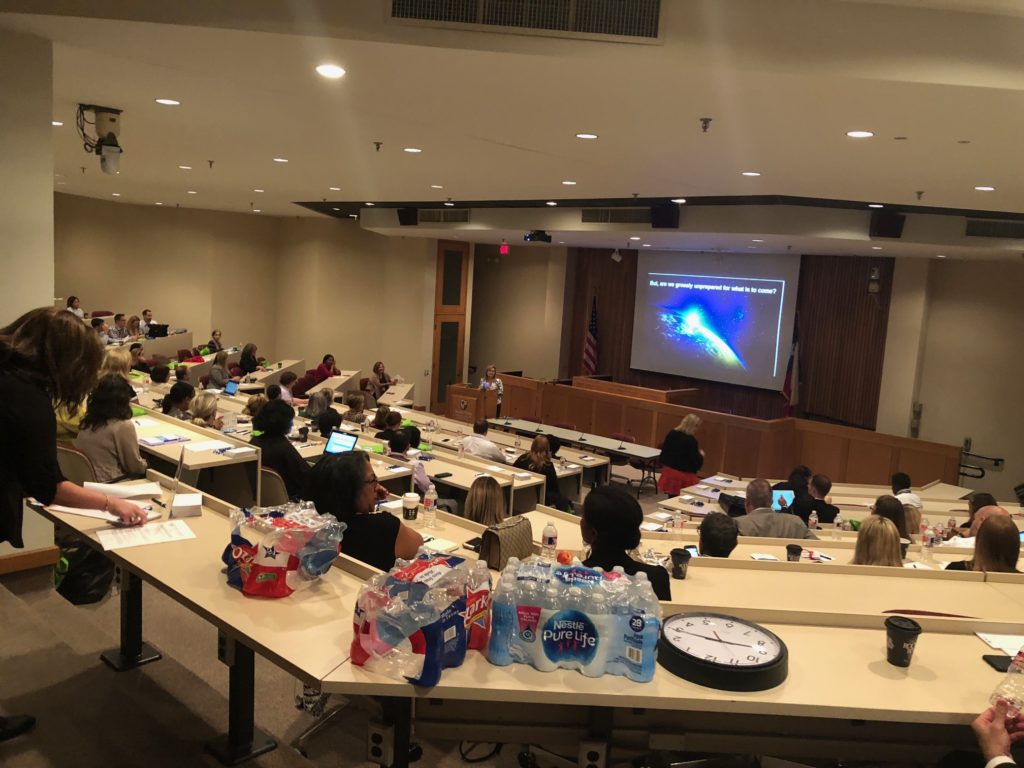
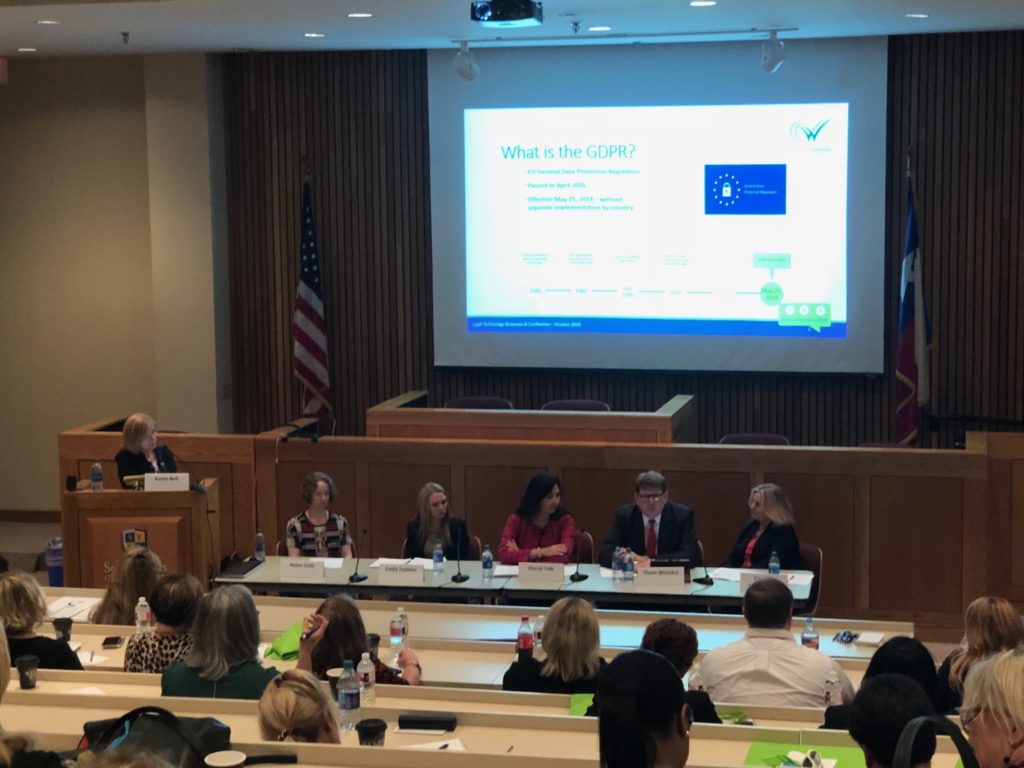
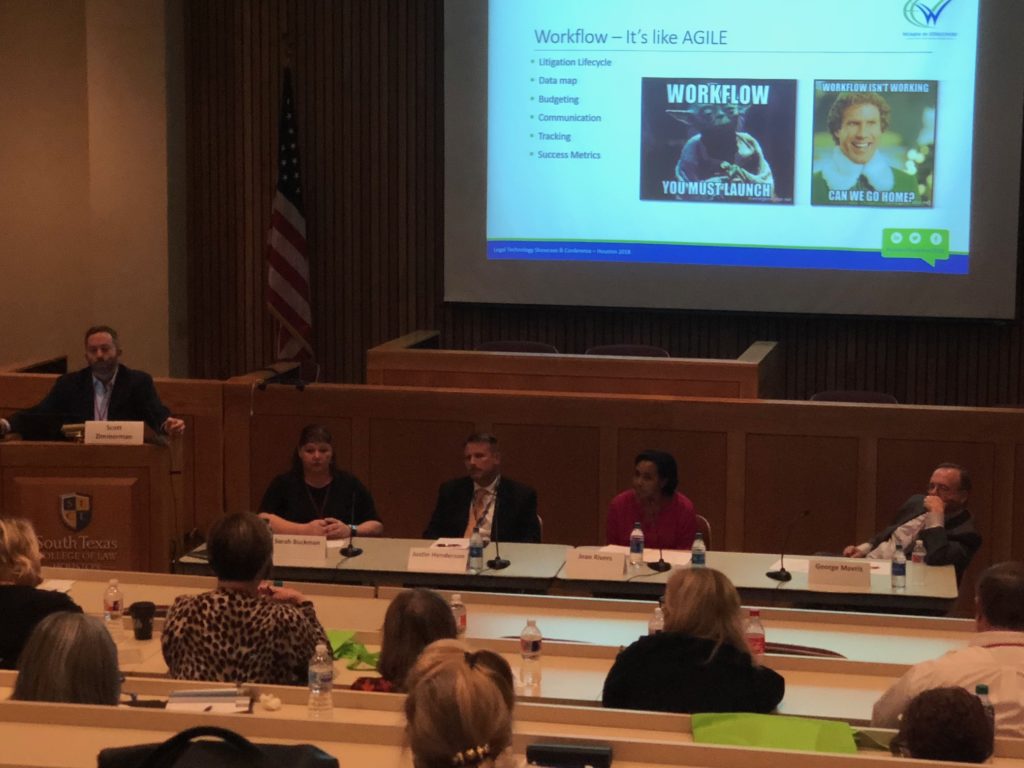
Also, if you’re going to be in Houston tomorrow, September 27, just a reminder that I will be speaking at the second annual Legal Technology Showcase & Conference, hosted by the Women in eDiscovery (WiE), Houston Chapter, South Texas College of Law and the Association of Certified E-Discovery Specialists (ACEDS).  I’ll be part of the panel discussion AI and TAR for Legal: Use Cases for Discovery and Beyond at 3:00pm and CloudNine is also a Premier Platinum Sponsor for the event (as well as an Exhibitor, so you can come learn about us too).  Click here to register!

Sponsor: This blog is sponsored by CloudNine, which is a data and legal discovery technology company with proven expertise in simplifying and automating the discovery of data for audits, investigations, and litigation. Used by legal and business customers worldwide including more than 50 of the top 250 Am Law firms and many of the world’s leading corporations, CloudNine’s eDiscovery automation software and services help customers gain insight and intelligence on electronic data.

Disclaimer: The views represented herein are exclusively the views of the author, and do not necessarily represent the views held by CloudNine. eDiscovery Daily is made available by CloudNine solely for educational purposes to provide general information about general eDiscovery principles and not to provide specific legal advice applicable to any particular circumstance. eDiscovery Daily should not be used as a substitute for competent legal advice from a lawyer you have retained and who has agreed to represent you.
Eight is Great! eDiscovery Daily is Eight Years Old!

As a loving husband, it’s a bad thing to forget an anniversary.  Thankfully, I forgot the other one.

Holy $#*%@!  I can’t believe I missed the anniversary for the blog!  It snuck up on me.  Anyway, believe it or not, it has been eight years ago last Thursday since we launched the eDiscovery Daily blog!

We launched eight years ago on September 20, 2010.  Back then, we told you to not get “wild” with wildcards and published our first case law post about a case where the spoliator of data was actually threatened with jail time –  our first of 640 posts about case law to date, covering more than 500 distinct cases!  We’ve published over 2,101 lifetime posts, and every post is still available on the site for your reference.  We’re eight, but we’re not behind the eight ball!

As always, we have you to thank for all of that success!  Thanks for making the eDiscovery Daily blog a regular resource for your eDiscovery news and analysis!  We really appreciate the support!

As many of you know by now, we like to take a look back every six months at some of the important stories and topics during that time.  So, here are some posts over the last few months you may have missed.  Enjoy!

OK, let me get this straight: Twitter doesn’t have custody and control over its own direct messages?

Are private Facebook photos discoverable in a personal injury case?  Depends on which court you ask.

Talk about fingering a suspect!  Cops are now opening iPhones with dead people’s fingerprints.

Do you watch movies and TV shows on Netflix or Amazon Prime?  Or, listen to music on Pandora or Spotify?  Then, you may be a user of predictive coding technology and not realize it.

What happens in the Internet each minute in 2018? More than ever.

More than two thirds of data breaches take months to discover.

If you use “sock puppet” accounts to try to defame the author whose copyrighted book you infringed and try to hide it, you might get sanctioned.

What percentage of Freedom of Information Act (FOIA) requests actually result in receiving all of the information requested? 75 percent? 50 percent? You might be surprised.

Can you still be sanctioned after a jury verdict?  Better believe it.

Artificial intelligence (AI) is transforming the practice of law, but could it (finally) spell the end of the billable hour?

Are you “primed” to learn best practices for handling social media?  The Sedona Conference® can help!

2018 is certainly on its way to becoming the year of data privacy rights for the individual – especially in California.

Public or private cloud isn’t the only question you should be asking about a cloud solution, you could have as many as three providers associated with your solution.  Do you know how to evaluate them?

Does accessing historical records containing the physical locations of cellphones without a search warrant violate the Fourth Amendment?  Let’s ask SCOTUS!

Over the past few years, private equity firms have invested in over a dozen eDiscovery companies (including this one).

Leave it to Craig Ball to come up with a sensible forensic examination protocol that you can use and learn from.

This is just a sampling of topics that we’ve covered.  Hope you enjoyed them!

Thanks for the interest you’ve shown in the topics!  We will do our best to continue to provide interesting and useful eDiscovery news and analysis.  And, as always, please share any comments you might have or if you’d like to know more about a particular topic!  On to 9 years!  (Cloud)Nine will be divine!  :o)

Sponsor: This blog is sponsored by CloudNine, which is a data and legal discovery technology company with proven expertise in simplifying and automating the discovery of data for audits, investigations, and litigation. Used by legal and business customers worldwide including more than 50 of the top 250 Am Law firms and many of the world’s leading corporations, CloudNine’s eDiscovery automation software and services help customers gain insight and intelligence on electronic data.

Disclaimer: The views represented herein are exclusively the views of the author, and do not necessarily represent the views held by CloudNine. eDiscovery Daily is made available by CloudNine solely for educational purposes to provide general information about general eDiscovery principles and not to provide specific legal advice applicable to any particular circumstance. eDiscovery Daily should not be used as a substitute for competent legal advice from a lawyer you have retained and who has agreed to represent you.
In No Small Ruling, Court Takes Defendant to Task for Discovery Violations: eDiscovery Case Law

In Small v. Univ. Med. Ctr., No. 2:13-cv-0298-APG-PAL (D. Nev. Aug. 9, 2018), Nevada Magistrate Judge Peggy A. Leen, in a lengthy ruling so large it included a table of contents, accepted and adopted in part and overruled in part the Special Master’s Report and Recommendation and Final Findings of Fact and Conclusions of Law.  Judge Leen sanctioned the defendant with an adverse inference instruction to the jury instead of the default judgment sanction recommended by the special master.

Case Background

In this case involving claims against the defendant for unpaid wages and overtime which followed a Department of Labor (“DOL”) investigation that addressed issues about uncompensated time for hourly employees related to uncompensated meal breaks, the court “reluctantly” appointed a special master after “a series of hearings over many months made it painfully apparent” that the defendant, its counsel, and consultants were failing in their efforts to produce ESI responsive to plaintiffs’ discovery requests, including issuing a production to the plaintiffs that was mostly “unintelligible” with extracted text in pages of undecipherable codes complete with Japanese and Korean characters.

In special master Daniel Garrie’s report (covered by us nearly four years ago here), he found that “Not a single UMC executive took any of the steps necessary to ensure the preservation of evidence. No UMC executive took responsibility for instituting or enforcing a ‘litigation hold,’ or otherwise acting to ensure the preservation of documents in this case.”  Calling the defendant’s widespread failure to preserve data a “mockery of the orderly administration of justice”, he recommended sanctions, stating, “Defendant UMC’s extraordinary misconduct and substantial and willful spoliation of relevant ESI in this case resulted in substantial prejudice to Plaintiffs and the classes, and misled Plaintiffs, the Court, and the Special Master on numerous discovery issues…The level of intentional destruction of evidence by UMC shocks the conscious. As such, as to the 613 Opt-In Plaintiffs, default judgment should be entered against UMC pursuant to Rule 37(b)(2)(A)(iii) & (vi) and the Court’s inherent powers.”

Judge’s Ruling

In a lengthy ruling that re-capped in detail the complaint, the various hearings regarding eDiscovery issues and various declarations during the special master proceedings, Judge Leen stated the following findings and conclusions:

  • “Special Master Garrie was Professional, Neutral, Possessed Specialized Knowledge and Expertise, and Remedied Much of UMC’s ESI Deficiencies” (despite the defendant’s contentions to the contrary);
  • “UMC Failed to Comply with the Court’s Orders to Preserve and Produce ESI”;
  • “UMC Had No Preservation Policy or Litigation Hold Policy and Failed to Timely Implement One”;
  • “UMC Executives Failed to Accept Responsibility for Ensuring that ESI was Preserved and Failed to Notify Key Custodians and IT Staff to Preserve, and Prevent Loss, or Destruction of Relevant, Responsive ESI”;
  • “UMC Failed to Disclose the Existence of Relevant ESI Repositories, Including Multiple Timekeeping Systems and the Q-Drive (drive with files containing human resources, corporate compliance, employee grievance, payroll, and DOL investigation data) Until Late in the Special Master Proceedings”;
  • “UMC Modified, Lost, Deleted and/or Destroyed ESI Responsive to Plaintiffs’ Discovery Requests”;
  • “UMC’s Failure to Comply with its Legal Duty to Preserve, Failure to Put in Place a Timely Litigation Hold, Failure to Comply with Multiple Court Orders to Preserve and Produce Responsive ESI, and Loss and Destruction of Responsive ESI (1) Necessitated the Appointment of a Special Master, (2) Caused Substantial Delay of these Proceedings, and (3) Caused Plaintiffs to Incur Needless Monetary Expenses”; and
  • “The Special Master Correctly Concluded UMC Repeatedly Misrepresented the Completeness of its Production of Documents Produced to DOL; However, UMC Was Not Ordered to Produce Kronos Payroll Data in Spreadsheet Format”.

With regard to sanctions for the defendant, Judge Leen stated “There is no question UMC failed to implement a timely litigation hold and failed to communicate its legal preservation duties to key custodians of discoverable evidence. There is no question that UMC failed to preserve discoverable ESI. There is no question data was lost or destroyed as a result. There is no question sanctions are warranted. UMC concedes they are. The only question is what sanctions are appropriate and proportional for the violations.”

Ruling “it is ‘just and practicable’ to apply the amended version of Rule 37(e)”, Judge Leen ultimately determined “Although the court finds plaintiffs have been prejudiced by the loss of data from key repositories and custodians, the loss has not threatened to interfere with the rightful decision of the case on its merits given the large volume of ESI the special master was able to ensure that UMC produced. For these reasons, the court finds that lesser sanctions are appropriate, proportional, and no greater than necessary to cure the prejudice caused by the loss of ESI uncovered by the special master.”

As a result, Judge Leen, while accepting and adopting the special master’s report, overruled the Special Master’s recommendation of case dispositive sanctions and instead stated: “UMC is sanctioned in the form of an instruction to the jury that the court has found UMC failed to comply with its legal duty to preserve discoverable information, failed to comply with its discovery obligations, and failed to comply with a number of the court’s orders. The instruction will provide that these failures resulted in the loss or destruction of some ESI relevant to the parties’ claims and defenses and responsive to plaintiffs’ discovery requests, and that the jury may consider these findings with all other evidence in the case for whatever value it deems appropriate.”  She also imposed monetary sanctions against the defendant in the form of “reasonable costs and attorneys’ fees unnecessarily incurred by plaintiffs”.

So, what do you think?  Did the court go far enough with sanctions against the defendant?  Please let us know if any comments you might have or if you’d like to know more about a particular topic.

For more about this case, check out this Above the Law article written by Mike Quartararo.

Case opinion link courtesy of eDiscovery Assistant.

Also, if you’re going to be in Houston this Thursday, September 27, just a reminder that I will be speaking at the second annual Legal Technology Showcase & Conference, hosted by the Women in eDiscovery (WiE), Houston Chapter, South Texas College of Law and the Association of Certified E-Discovery Specialists (ACEDS).  I’ll be part of the panel discussion AI and TAR for Legal: Use Cases for Discovery and Beyond at 3:00pm and CloudNine is also a Premier Platinum Sponsor for the event (as well as an Exhibitor, so you can come learn about us too).  Click here to register!

Sponsor: This blog is sponsored by CloudNine, which is a data and legal discovery technology company with proven expertise in simplifying and automating the discovery of data for audits, investigations, and litigation. Used by legal and business customers worldwide including more than 50 of the top 250 Am Law firms and many of the world’s leading corporations, CloudNine’s eDiscovery automation software and services help customers gain insight and intelligence on electronic data.

Disclaimer: The views represented herein are exclusively the views of the author, and do not necessarily represent the views held by CloudNine. eDiscovery Daily is made available by CloudNine solely for educational purposes to provide general information about general eDiscovery principles and not to provide specific legal advice applicable to any particular circumstance. eDiscovery Daily should not be used as a substitute for competent legal advice from a lawyer you have retained and who has agreed to represent you.
Plaintiffs Granted Discovery Extension Due to Defendant’s TAR Review Glitch: eDiscovery Case Law

In the case In Re Domestic Airline Travel Antitrust Litigation, MDL Docket No. 2656, Misc. No. 15-1404 (CKK), (D.D.C. Sept. 13, 2018), District of Columbia District Judge Colleen Kollar-Kotelly granted the Plaintiffs’ Motion for an Extension of Fact Discovery Deadlines (over the defendants’ objections) for six months, finding that defendant “United’s production of core documents that varied greatly from the control set in terms of the applicable standards for recall and precision and included a much larger number of non-responsive documents that was anticipated” (United’s core production of 3.5 million documents contained only 600,000 documents that were responsive).

Case Background

In the case involves a multidistrict class action litigation brought by the plaintiffs (purchasers of air passenger transportation for domestic travel) alleging that the defendant airlines willingly conspired to engage in unlawful restraint of trade, the plaintiffs filed an instant Motion for Extension of Time to Complete Discovery, requesting an extension of six months, predicated on an “issue with United’s ‘core’ document production,” asserting that defendant United produced more than 3.5 million [core] documents to the Plaintiffs, but “due to United’s technology assisted review process (‘TAR’), only approximately 17%, or 600,000, of the documents produced are responsive to Plaintiffs’ requests,” and the plaintiffs (despite having staffed their discovery review with 70 attorneys) required additional time to sort through them.

Both defendants (Delta and United) opposed the plaintiffs’ request for an extension, questioning whether the plaintiffs had staffed the document review with 70 attorneys and suggesting the Court review the plaintiffs’ counsel’s monthly time sheets to verify that statement.  Delta also questioned by it would take the plaintiffs so long to review the documents and tried to extrapolate how long it would take to review the entire set of documents based on a review of 3 documents per minute (an analysis that the plaintiffs called “preposterous”).  United indicated that it engaged “over 180 temporary contract attorneys to accomplish its document production and privilege log process within the deadlines” set by the Court, so the plaintiffs should be expected to engage in the same expenditure of resources.  But, the plaintiffs contended that they “could not have foreseen United’s voluminous document production made up [of] predominantly non-responsive documents resulting from its deficient TAR process when they jointly proposed an extension of the fact discovery deadline in February 2018.”

Judge’s Ruling

Judge Kollar-Kotelly noted that “Plaintiffs contend that a showing of diligence involves three factors — (1) whether the moving party diligently assisted the Court in developing a workable scheduling order; (2) that despite the diligence, the moving party cannot comply with the order due to unforeseen or unanticipated matters; and (3) that the party diligently sought an amendment of the schedule once it became apparent that it could not comply without some modification of the schedule.”  She noted that “there is no dispute that the parties diligently assisted the Court in developing workable scheduling orders through their preparation of Joint Status Reports prior to the status conferences in which discovery issues and scheduling were discussed, and in their meetings with the Special Master, who is handling discovery matters in this case.”

Judge Kollar-Kotelly also observed that “United’s core production of 3.5 million documents — containing numerous nonresponsive documents — was unanticipated by Plaintiffs, considering the circumstances leading up to that production” and that “Plaintiffs devoted considerable resources to the review of the United documents prior to filing this motion seeking an extension”.  Finding also that “Plaintiffs’ claim of prejudice in not having the deadlines extended far outweighs any inconvenience that Defendants will experience if the deadlines are extended”, Judge Kollar-Kotelly found “that Plaintiffs have demonstrated good cause to warrant an extension of deadlines in this case based upon Plaintiffs’ demonstration of diligence and a showing of nominal prejudice to the Defendants, if an extension is granted, while Plaintiffs will be greatly prejudiced if the extension is not granted.”  As a result, she granted the motion to request the extension.

So, what do you think?  Was the court right to have granted the extension?  Please let us know if any comments you might have or if you’d like to know more about a particular topic.

Case opinion link courtesy of eDiscovery Assistant.

Also, if you’re going to be in Houston on Thursday, September 27, just a reminder that I will be speaking at the second annual Legal Technology Showcase & Conference, hosted by the Women in eDiscovery (WiE), Houston Chapter, South Texas College of Law and the Association of Certified E-Discovery Specialists (ACEDS).  I’ll be part of the panel discussion AI and TAR for Legal: Use Cases for Discovery and Beyond at 3:00pm and CloudNine is also a Premier Platinum Sponsor for the event (as well as an Exhibitor, so you can come learn about us too).  Click here to register!

Sponsor: This blog is sponsored by CloudNine, which is a data and legal discovery technology company with proven expertise in simplifying and automating the discovery of data for audits, investigations, and litigation. Used by legal and business customers worldwide including more than 50 of the top 250 Am Law firms and many of the world’s leading corporations, CloudNine’s eDiscovery automation software and services help customers gain insight and intelligence on electronic data.

Disclaimer: The views represented herein are exclusively the views of the author, and do not necessarily represent the views held by CloudNine. eDiscovery Daily is made available by CloudNine solely for educational purposes to provide general information about general eDiscovery principles and not to provide specific legal advice applicable to any particular circumstance. eDiscovery Daily should not be used as a substitute for competent legal advice from a lawyer you have retained and who has agreed to represent you.

Survey Says! Predictive Coding Technologies and Protocols Survey Results: eDiscovery Trends

Last week, I discussed the predictive coding survey that Rob Robinson was conducting on his Complex Discovery site (along with the overview of key predictive coding related terms.  The results are in and here are some of the findings.

As Rob notes in the results post here, the Predictive Coding Technologies and Protocols Survey was initiated on August 31 and concluded on September 15.  It’s a non-scientific survey designed to help provide a general understanding of the use of predictive coding technologies and protocols from data discovery and legal discovery professionals within the eDiscovery ecosystem.  The survey was designed to provide a general understanding of predictive coding technologies and protocols and had two primary educational objectives:

  • To provide a consolidated listing of potential predictive coding technology and protocol definitions. While not all-inclusive or comprehensive, the listing was vetted with selected industry predictive coding experts for completeness and accuracy, thus it appears to be profitable for use in educational efforts.
  • To ask eDiscovery ecosystem professionals about their usage and preferences of predictive coding platforms, technologies, and protocols.

There were 31 total respondents in the survey.  Here are some of the more notable results:

  • More than 80% of responders (80.64%) shared that they did have a specific primary platform for predictive coding versus just under 20% (19.35%), who indicated they did not.
  • There were 12 different platforms noted as primary predictive platforms by responders, but only three platforms received more than one vote and they accounted for more than 50% of responses (61%).
  • Active Learning was the most used predictive coding technology, with more than 70% of responders (70.96%) reporting that they use it in their predictive coding efforts.
  • Just over two-thirds of responders (67.74%) use more than one predictive coding technology in their predictive coding efforts, while just under one-third (32.25%) use only one.
  • Continuous Active Learning (CAL) was (by far) the most used predictive coding protocol, with more than 87% of responders (87.09%) reporting that they use it in their predictive coding efforts.

Rob has reported several other results and provided graphs for additional details.  To check out all of the results, click here.

So, what do you think?  Do any of the results surprise you?  Please share any comments you might have or if you’d like to know more about a particular topic.

Also, if you’re going to be in Houston on Thursday, September 27, just a reminder that I will be speaking at the second annual Legal Technology Showcase & Conference, hosted by the Women in eDiscovery (WiE), Houston Chapter, South Texas College of Law and the Association of Certified E-Discovery Specialists (ACEDS).  I’ll be part of the panel discussion AI and TAR for Legal: Use Cases for Discovery and Beyond at 3:00pm and CloudNine is also a Premier Platinum Sponsor for the event (as well as an Exhibitor, so you can come learn about us too).  Click here to register!

Image Copyright (C) FremantleMedia North America, Inc.

Sponsor: This blog is sponsored by CloudNine, which is a data and legal discovery technology company with proven expertise in simplifying and automating the discovery of data for audits, investigations, and litigation. Used by legal and business customers worldwide including more than 50 of the top 250 Am Law firms and many of the world’s leading corporations, CloudNine’s eDiscovery automation software and services help customers gain insight and intelligence on electronic data.

Disclaimer: The views represented herein are exclusively the views of the author, and do not necessarily represent the views held by CloudNine. eDiscovery Daily is made available by CloudNine solely for educational purposes to provide general information about general eDiscovery principles and not to provide specific legal advice applicable to any particular circumstance. eDiscovery Daily should not be used as a substitute for competent legal advice from a lawyer you have retained and who has agreed to represent you.

In California, IoT Device Cybersecurity Foresight is Also 2020, Apparently: Cybersecurity Trends

As I noted a couple of months ago, 2018 is certainly on its way to becoming the year of data privacy rights for the individual and, back then, California passed a new data privacy law which will give consumers several rights regarding their personal data (though the California AG doesn’t seem thrilled about it).  Now, California is once again poised to take the lead on important new technology policy.

As reported by The Washington Post (The Cybersecurity 202: California’s Internet of Things cybersecurity bill could lay groundwork for federal action, written by Derek Hawkins), a bill to set cybersecurity standards for Web-connected devices — from thermostats to webcams to cars — is awaiting Governor Jerry Brown’s signature after cruising through the state legislature late last month. If Brown signs it, California would become the first state to pass legislation to govern security of Internet of Things (IoT) devices, which experts say is crucial as these products proliferate and malicious hackers find new ways to exploit them.  Like the data privacy law passed back in June, this one (if signed by Governor Brown) also takes effect on January 1, 2020.

However, many cybersecurity researchers argue the California bill (SB-327) fails to address the core issues that make connected devices vulnerable to hacks. Nonetheless, it could lay the groundwork for stronger IoT cybersecurity legislation at both the state and federal level. California’s bill, if signed by Brown, could rekindle the national discussion in a similar way to how landmark privacy law the state recently approved helped spur high-level talks between the Commerce Department and tech giants about federal privacy regulations.

Policymakers grew more concerned about vulnerabilities in IoT devices after the massive Mirai botnet attack in 2016 highlighted just how poorly secured many such devices are. In that incident, hackers exploited weaknesses in webcams and other connected devices and used them to launch cyberattacks that took down Netflix, Spotify and other major websites for hours.

There’s legislation on the table in Congress that would go further. The Internet of Things Cybersecurity Improvement Act, introduced by Virginia Senator Mark R. Warner and Colorado Senator Cory Gardner, would use the federal government’s buying power to boost IoT security. Under the bill, any companies that do business with the federal government would have to ensure that their connected devices are patchable, come with passwords that can be changed, and are otherwise free of known security vulnerabilities. Another bill, the Securing IoT Act, would require the Federal Communications Commission to create cybersecurity standards for certifying wireless equipment.  However, those efforts and others have so far failed to gain traction, despite bipartisan agreement that some sort of federal standards may be necessary.

As for the California bill, some experts said its broad language was too vague to be effective, and offered an example of how not to approach IoT security. Well-intended as it might be, the bill “would do little improve security, while doing a lot to impose costs and harm innovation,” according to security researcher Robert Graham.

I guess we’ll see what happens with that bill as well as other efforts to regulate the security of IoT devices.  As usual, it will probably take a few well publicized hacks before any serious progress is made.  We take for granted how many IoT devices we use these days – maybe I’ll have to conduct a survey soon to get a sense of how many IoT devices each of us uses and what types.  That would be interesting!

So, what do you think?  Will the California IoT bill make a difference?  Please let us know if any comments you might have or if you’d like to know more about a particular topic.

Sponsor: This blog is sponsored by CloudNine, which is a data and legal discovery technology company with proven expertise in simplifying and automating the discovery of data for audits, investigations, and litigation. Used by legal and business customers worldwide including more than 50 of the top 250 Am Law firms and many of the world’s leading corporations, CloudNine’s eDiscovery automation software and services help customers gain insight and intelligence on electronic data.

Disclaimer: The views represented herein are exclusively the views of the author, and do not necessarily represent the views held by CloudNine. eDiscovery Daily is made available by CloudNine solely for educational purposes to provide general information about general eDiscovery principles and not to provide specific legal advice applicable to any particular circumstance. eDiscovery Daily should not be used as a substitute for competent legal advice from a lawyer you have retained and who has agreed to represent you.

Despite Carpenter, This Defendant’s Cell Site Location Information is Ruled Admissible: eDiscovery Case Law

In United States v. Pleasant, Criminal Action No. 17-62 (E.D. Pa. Sept. 5, 2018), Pennsylvania District Judge Gerald Austin McHugh ruled that the defendant’s motion to suppress historical cell-site location information associated with his cellular telephone lacked merit, despite the Supreme Court’s recent decision in Carpenter v. United States, because the agents proceeded “by means of a court order issued under a federal statute that had repeatedly withstood Fourth Amendment scrutiny…in good faith under then existing law”.

Case Background

In this prosecution for multiple bank robberies, the defendant moved to suppress historical cell-site location information (CSLI) associated with his cellular telephone, citing the recent Supreme Court ruling in Carpenter v. United States. The Government obtained the CSLI, without a warrant, through an order issued pursuant to 18 U.S.C. § 2703(c), a provision of the Stored Communications Act, based on a showing that the records were “relevant and material” to an ongoing criminal investigation.

Judge’s Ruling

Judge McHugh observed that “Defendant correctly argues that under the Supreme Court’s recent decision in Carpenter v. United States, ___ U.S. ___, 138 S. Ct. 2206 (2018), the CSLI was obtained by the Government in violation of the Fourth Amendment. Defendant is also correct that Carpenter retroactively applies to this case. That does not end the inquiry, because the Government is equally correct that there is a good faith exception to application of the exclusionary rule. Having considered the parties’ submissions, I am persuaded that the government agents who accessed this information did so in good faith reliance on a federal statute and circuit court precedent that was controlling at the time.”

While noting that “In Carpenter, the Supreme Court addressed the constitutionality of this provision under the Fourth Amendment and concluded that, in accessing CSLI from wireless carriers, the Government had ‘invaded’ the defendant’s ‘reasonable expectation of privacy in the whole of his physical movements’”, Judge McHugh ruled:

“Despite Carpenter, Defendant’s Motion lacks merit. Under the exclusionary rule, as a general matter, the government may not introduce evidence in a criminal trial that was obtained in violation of the Fourth Amendment. The exclusionary rule, however, is rooted in policy considerations: it serves to enforce the Fourth Amendment by discouraging police misconduct. As the Supreme Court has recognized, the Fourth Amendment protects ‘[t]he right of the people to be secure in their persons, houses, papers, and effects, against unreasonable searches and seizures,’ but it has no provision ‘expressly precluding the use of evidence obtained in violation of its commands.’…Consequently, the exclusionary rule ‘is not an individual right and applies only where it `result[s] in appreciable deterrence.’’…Stated differently, it is a judicially imposed sanction applied when necessary to enforce the Constitution.”

As a result, Judge McHugh ruled: “Because application of the exclusionary rule here would not serve the purpose of deterring unlawful conduct by law enforcement, Defendant’s Motion to Suppress will be denied.”

So, what do you think?  Was the court right to have ruled the CSLI admissible despite the recent Carpenter ruling?  Please let us know if any comments you might have or if you’d like to know more about a particular topic.

Case opinion link courtesy of eDiscovery Assistant.

Also, if you’re going to be in Houston on Thursday, September 27, just a reminder that I will be speaking at the second annual Legal Technology Showcase & Conference, hosted by the Women in eDiscovery (WiE), Houston Chapter, South Texas College of Law and the Association of Certified E-Discovery Specialists (ACEDS).  I’ll be part of the panel discussion AI and TAR for Legal: Use Cases for Discovery and Beyond at 3:00pm and CloudNine is also a Premier Platinum Sponsor for the event (as well as an Exhibitor, so you can come learn about us too).  Click here to register!

Sponsor: This blog is sponsored by CloudNine, which is a data and legal discovery technology company with proven expertise in simplifying and automating the discovery of data for audits, investigations, and litigation. Used by legal and business customers worldwide including more than 50 of the top 250 Am Law firms and many of the world’s leading corporations, CloudNine’s eDiscovery automation software and services help customers gain insight and intelligence on electronic data.

Disclaimer: The views represented herein are exclusively the views of the author, and do not necessarily represent the views held by CloudNine. eDiscovery Daily is made available by CloudNine solely for educational purposes to provide general information about general eDiscovery principles and not to provide specific legal advice applicable to any particular circumstance. eDiscovery Daily should not be used as a substitute for competent legal advice from a lawyer you have retained and who has agreed to represent you.

University of Florida Brings eDiscovery Teachings to a Chinese University: eDiscovery Best Practices

Needless to say, eDiscovery is becoming more global than ever and we’ve certainly seen a lot of instances where non-U.S. legal practitioners have to not only better understand U.S. discovery obligations, but also understand the methodologies and technologies associated with managing eDiscovery.  One U.S. university recently spent some time bringing some of those teachings to a university in Nanjing, China.

As covered in Legaltech News® (University of Florida Brings E-Discovery Expertise Abroad With Chinese University Partnership, written by Rhys Dipshan), the University of Florida’s Levin College of Law recently partnered with Southeast University in Nanjing, China, to launch an intensive two-week course aimed at educating local law students on U.S. eDiscovery laws and practices. William Hamilton, legal skills professor and executive director of the University of Florida’s E-Discovery Project, led the course, which took place at Southeast University during the last two weeks of August.

Transmitting Hamilton’s wealth of eDiscovery knowledge to the 68 undergraduate and graduate Chinese students who attended the class, and who were all used to a vastly different legal culture, was a challenge. “The e-discovery process is not intuitive to Chinese students,” Hamilton said.  So, he had an idea about how to explain this complex subject matter to e-discovery novices: stick to concrete, real-life examples.

Hamilton designed the two-week course around a fictional cross-border e-discovery case. “We set up the course as though we were in the trenches, and I think that was very helpful for the students to see the context right away, instead of starting with relatively abstract concepts.”  As a result, the cross-border eDiscovery case that Hamilton created was loosely based on actual litigation he handled years ago as a practicing attorney in Florida and involved two fictional companies: “U.S. Computer” and “Nanjing Electric.”

“I created a mock dispute in which Nanjing had manufactured motherboards and shipped those to U.S. Computer to be incorporated into a product that was then sold to consumers. The consumer product, however, allegedly had defects in it, and the U.S. consumers were complaining and returning the product. So U.S. computer sued Nanjing Electric for breach of contract.”

Hamilton asked the class to pretend they were the law firm representing “Nanjing Electric,” and explained the U.S. legal process and e-discovery obligations they would face. From there, he moved on to teaching the students how to use e-discovery tools in preparation for the pretrial discovery.

There are talks between the two schools to extend their partnership and Hamilton noted that Southeast University is “very eager to continue to expand the relationship.”  In fact, given that eDiscovery expertise is fast becoming a much-needed skill in China, he expects such collaborations to become more common in the future.

So, what do you think?  Is your organization dealing with more cross-border eDiscovery?  Please share any comments you might have or if you’d like to know more about a particular topic.

Sponsor: This blog is sponsored by CloudNine, which is a data and legal discovery technology company with proven expertise in simplifying and automating the discovery of data for audits, investigations, and litigation. Used by legal and business customers worldwide including more than 50 of the top 250 Am Law firms and many of the world’s leading corporations, CloudNine’s eDiscovery automation software and services help customers gain insight and intelligence on electronic data.

Disclaimer: The views represented herein are exclusively the views of the author, and do not necessarily represent the views held by CloudNine. eDiscovery Daily is made available by CloudNine solely for educational purposes to provide general information about general eDiscovery principles and not to provide specific legal advice applicable to any particular circumstance. eDiscovery Daily should not be used as a substitute for competent legal advice from a lawyer you have retained and who has agreed to represent you.

Houston, We Have an Adverse Inference Finding: eDiscovery Case Law

In Hernandez, et al. v. City of Houston, No. 4:16-CV-3577 (S.D. Tex. Aug. 30, 2018), Texas District Judge Kenneth M. Hoyt, finding that the defendant “intentionally destroyed” evidence by wiping the hard drives of several custodians no longer employed by the City, determined “that entering an adverse inference finding is appropriate” against the defendant.

Case Background

In this case regarding alleged illegal detainment of the plaintiffs in City jail where each of the plaintiffs contends that he was held in the City’s jail for more than 48 hours without a judicial determination or a probable cause hearing, the Court entered an agreed ESI order in November 2017, which promoted cooperation between the parties (including agreement on search terms) and designated thirteen specific custodians, whose records the plaintiffs were seeking.  Weeks after the ESI Order, the defendant had still not supplemented missing metadata from an earlier production to bring the production into compliance with the Court’s Order and, after several meet and confers by phone, defendant’s counsel requested an in-person meeting.

On December 13, 2017, during that in-person meeting, the defendant represented that (i) it had not interviewed any of the custodians listed in the ESI Order, (ii) it had not collected documents from any of the custodians listed in the ESI Order and (iii) it had “wiped” the hard drives of six of those custodians no longer employed by the defendant.  At that meeting, the plaintiffs offered to provide names of vendors to help with document processing and review and offered to pay a substantial portion, if not all, of the costs that might be incurred. The defendant refused this offer and missed its December 15, 2017 deadline to certify document production was complete.

In January 2018, the defendant represented that it had collected 72,000 documents, but had yet to review them, despite the passage of the discovery deadline. By February 28, 2018, when the plaintiffs moved to compel production, the defendant had only produced 126 files from the Mayor’s office – all of which was unresponsive to the plaintiffs’ document requests.  In April 2018, the defendant claimed it had collected 2.6 million documents by running “word searches based on the ESI Protocol” and it would take 17,000 hours to review all of those documents.  Based on these representations, the plaintiffs agreed to provide a narrower set of search terms.  On April 10, 2018, the Court ordered the defendant to “produce all non-privileged documents responsive to the plaintiffs’ requests for production nos. 1-4, 8 and 9 in accordance with the Court’s November 8, 2017, ESI Order” and also notified the defendant that “[f]ailure to comply with this Order will result in sanctions, including but not limited to monetary sanctions and an adverse inference instruction”.

When the defendant ran the plaintiffs’ narrowed search terms, it retrieved 48,976 documents.  However, it then proceeded to unilaterally apply its own search terms, which retrieved 9,992 documents, which were reviewed for responsiveness.  The defendant produced only 368 responsive documents in response to the April 10 court order.

Judge’s Ruling

With regard to the wiped drives for the six custodians no longer employed by the defendant, Judge Hoyt stated: “Those hard drives contained ESI that should have been preserved by the City as soon as it anticipated litigation, and definitely after the instant lawsuit was filed. The City acknowledged its “clear obligation” to preserve all responsive documents after the litigation was pending. Yet the City failed to take reasonable steps to preserve the data on the hard drives and intentionally wiped the drives. The Court determines that the information on the hard drives cannot be restored or replaced through additional discovery.”

Judge Hoyt also found that the defendant had “Made Misrepresentations to the Court About Its Flawed Discovery Process”, indicating that it: 1) “represented that it needed to review 2.6 million documents”, 2) “did not review the 78,702 documents generated by the plaintiff’s April 2018 search terms”, 3) “represented that it had issued a litigation hold” and 4) “obfuscated the status of the hard drives”.

As a result, Judge Hoyt ruled, as follows:

“Federal Rule of Civil Procedure 37(b)(2) provides that an order establishing contested facts as true is an appropriate remedy when a party violates a discovery order. See Rule 37(b)(2)(i)-(ii). This type remedy cures the violation without inflicting additional costs on the parties, and for that reason, the Court determines, in its discretion that entering an adverse inference finding is appropriate…

Therefore, the Court HOLDS that the following inference is appropriate based on the City’s conduct:

It is established that (a) throughout the class period, the City of Houston had a policy of not releasing warrantless arrestees who had not received neutral determinations of probable cause within the constitutionally required period of time; (b) throughout the class period, the City’s policymakers were aware of this policy; and (c) the City’s policymakers acted with deliberate indifference to the unconstitutional policy and the constitutional violations that resulted.”

So, what do you think?  Was the adverse inference sanction appropriate in this case?  Please let us know if any comments you might have or if you’d like to know more about a particular topic.

Also, if you’re going to be in Houston on Thursday, September 27, just a reminder that I will be speaking at the second annual Legal Technology Showcase & Conference, hosted by the Women in eDiscovery (WiE), Houston Chapter, South Texas College of Law and the Association of Certified E-Discovery Specialists (ACEDS).  I’ll be part of the panel discussion AI and TAR for Legal: Use Cases for Discovery and Beyond at 3:00pm and CloudNine is also a Premier Platinum Sponsor for the event (as well as an Exhibitor, so you can come learn about us too).  Click here to register!

Sponsor: This blog is sponsored by CloudNine, which is a data and legal discovery technology company with proven expertise in simplifying and automating the discovery of data for audits, investigations, and litigation. Used by legal and business customers worldwide including more than 50 of the top 250 Am Law firms and many of the world’s leading corporations, CloudNine’s eDiscovery automation software and services help customers gain insight and intelligence on electronic data.

Disclaimer: The views represented herein are exclusively the views of the author, and do not necessarily represent the views held by CloudNine. eDiscovery Daily is made available by CloudNine solely for educational purposes to provide general information about general eDiscovery principles and not to provide specific legal advice applicable to any particular circumstance. eDiscovery Daily should not be used as a substitute for competent legal advice from a lawyer you have retained and who has agreed to represent you.